
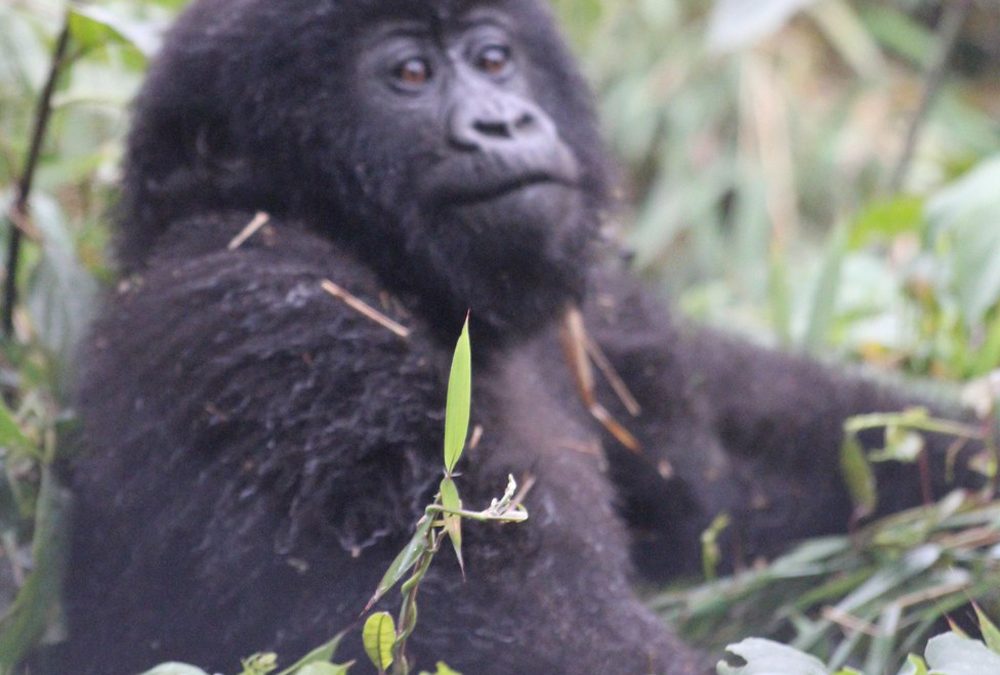
What is the Gorilla trekking experience in Rwanda? – Luxury gorilla trekking safaris in Rwanda – Best gorilla trekking holidays in East Africa.
What is the Gorilla trekking experience in Rwanda? The unique opportunity to see Mountain Gorillas in their natural habitat is unforgettable, some people say it’s a life time changing. Staying with the Mountain Gorillas as they go about their daily lives are carefully managed, with expert trackers and ranger guides leading small groups of tourists up bamboo-covered slopes to spend a precious and awe-inspiring one hour just a few feet away from the gentle creatures.
The Mountain Gorillas are spread across much of the equatorial African rainforest. The species is split into two and these are the lowland Gorillas and Mountain Gorillas. The volcanic range which spans Rwanda, Uganda and the Democratic Republic of the Congo is home to the endangered Mountain Gorilla. Tracking Mountain Gorillas in Rwanda is safe and relatively accessible.
There are approximately 1,000 Mountain Gorillas in the wild, with 604 in the Virunga Massif. The population is slowly increasing, thanks to concerted efforts between the governments, communities and NGOs. There are twelve habituated Mountain Gorilla families living in the Volcanoes National Park, with a few others habituated solely for scientific research. The Mountain Gorilla families consist of at least one silverback along with several females and juveniles.
There are eight Gorilla tracking permits issued per Gorilla family per day, meaning the encounter is as intimate and as unobtrusive as possible. With 96 Gorilla permits available each day in Rwanda, it is highly recommended to book in advance, through a reputable registered tour operator. Visitors gather at the Volcanoes National Park headquarters in Kinigi at 7am, and are allocated a Gorilla family on the day according to fitness levels, as well as being briefed on protocols and rules for visiting the Mountain Gorillas. The families are known as Susa, Igisha, Karisimbi, Sabyinyo, Amahoro, Agashya, Kwitonda, Umubano, Hirwa, Bwenge, Ugyenda and Muhoza.
Hikes up to their various locations can last from 30 minutes to three quarters of the day, reaching an altitude of between 2,500m and 4,000m above sea level. Porters or helpers are available to carry backpacks and cameras, as well as to offer a helping hand along the hike.
10% of the revenue from the Gorilla permits is channeled towards the local communities, to build schools and health centers, as well as the roads. There is a compensation fund for local farmers should any Mountain Gorillas damage their crops, which helps to ensure peaceful co-existence and to avoid any conflict between the communities and the wildlife.
Mountain Gorilla tracking also provides employment for many locals, from rangers and trackers to porters, drivers and staff at tourist lodges. For those interested in tracing the footsteps of Dian Fossey, her tomb is a 30-minute drive from the park headquarters and then two- or three-hours hike through the forest, to above 3,000m altitude.
The annual Kwita Izina, Gorilla naming ceremony is a special time to visit the Volcanoes National Park, with guided tours leading up the main event providing an opportunity to meet park staff and conservationists, attend cultural evenings and a celebration in Musanze.
At the naming ceremony itself, there’s music, dancing, and discussion about Rwanda’s great strides in Gorilla conservation, and the great challenges that remain.